





Speak with a licensed insurance agent

1-888-891-0229

Accident and Sickness Hospital Indemnity Plan: What It Covers and How It Differs

Reviewed by Russell Noga, Licensed Insurance Agent — Last updated October 28, 2026

An accident and sickness hospital indemnity plan pays you a fixed cash amount when you are hospitalized because of an injury or an illness. That is broader than an accident-only plan, which pays nothing for a stay caused by sickness. Sickness benefits often come with waiting periods and pre-existing condition limits, so the timing rules matter.

Most hospital stays are not caused by accidents. Pneumonia, heart trouble, infections, surgery for a chronic condition and childbirth are all common reasons people are admitted. That is why the words “accident and sickness” on a hospital plan are worth a close look.

This guide explains what the term means, how accident and sickness coverage compares with accident-only coverage, how waiting periods usually work and how to tell which kind of plan you are buying. For the basics, read what hospital indemnity insurance covers.
Compare Accident and Sickness Hospital Plans

What "Accident and Sickness" Means on a Hospital Plan

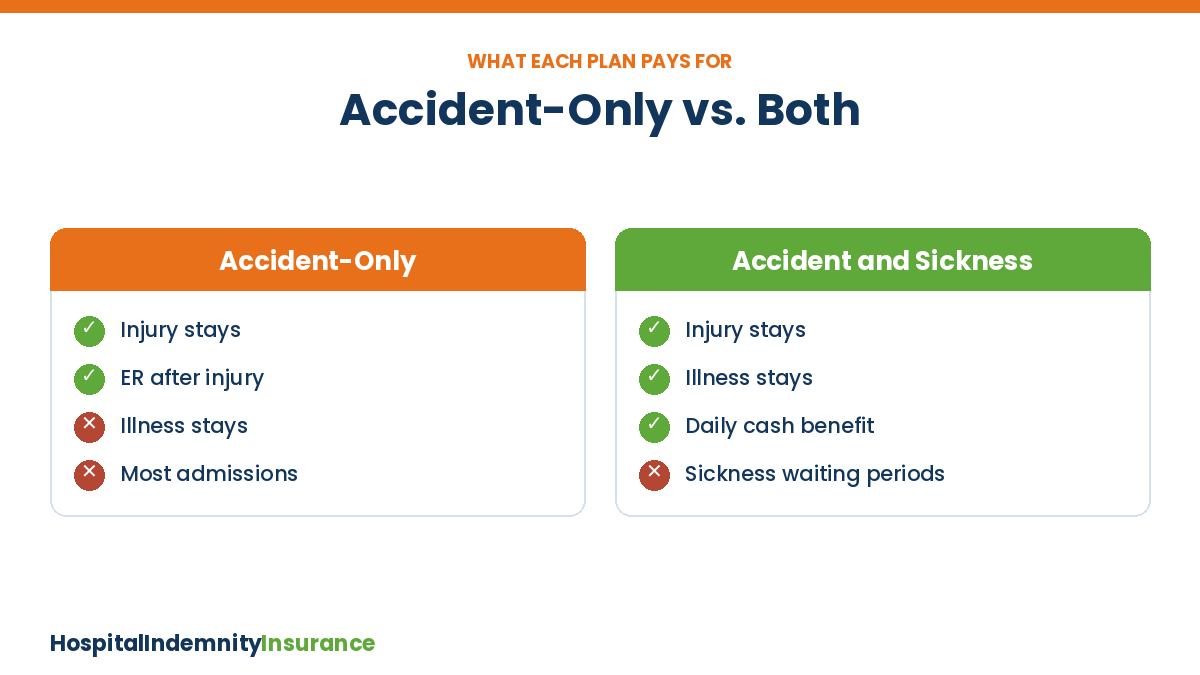
Accident and sickness hospital indemnity plan compared with an accident-only plan

In insurance language, “accident and sickness” (also called “accident and health”) is the broad family of coverage that pays for injuries and illnesses. When a hospital indemnity plan says it covers accident and sickness, it means a covered hospital stay can be caused by either one.

Accident. An unexpected injury, such as a fall, a car crash or a sports injury.

Sickness. An illness or disease, such as the flu, pneumonia, a heart condition or cancer. Many plans also treat pregnancy like a sickness for benefit purposes.

Fixed cash either way. The plan pays the amount in its benefit schedule, no matter what the hospital bills or what your health plan pays.

These plans are sold to working adults, families and people on Medicare, both through employers and directly from insurers. Because the term is used loosely in marketing, never assume a plan covers illness just because it is called a hospital plan. The benefit schedule and the definitions page of the policy tell you exactly which causes of a hospital stay qualify for payment.

Important: Hospital indemnity is a limited-benefit plan that pays fixed cash amounts. It is NOT health insurance, does not replace major medical coverage or Medicare and does not meet ACA minimum essential coverage.

Hospital Indemnity Quotes

Call a Licensed Agent Now

Compare hospital indemnity plans from several insurance companies in one call. Any age.

☎ 1-888-891-0229

No obligation to enroll

Accident-Only vs. Accident and Sickness Coverage

The National Association of Insurance Commissioners’ model rules, which many states follow, treat these as different kinds of coverage. Hospital indemnity pays fixed amounts for hospital confinement and other health events regardless of expenses, while accident-only coverage pays only for losses caused by an accident.

Feature Accident-only plan Accident and sickness hospital plan
Hospital stay from an injury Usually covered Covered
Hospital stay from an illness Not covered Covered, after any waiting period
Typical other benefits ER visits, fractures, dislocations, follow-up care Admission, daily stay, ICU, observation on some plans
Waiting periods Often none for accidents Often none for accidents; may apply to sickness
Premium Often lower Often higher, because it covers more

Benefits vary by plan and state. Read the outline of coverage.

Some workplace accident plans let you add a sickness hospital rider, which turns an accident plan into partial accident and sickness coverage. For a full side-by-side, see accident insurance vs. hospital indemnity.

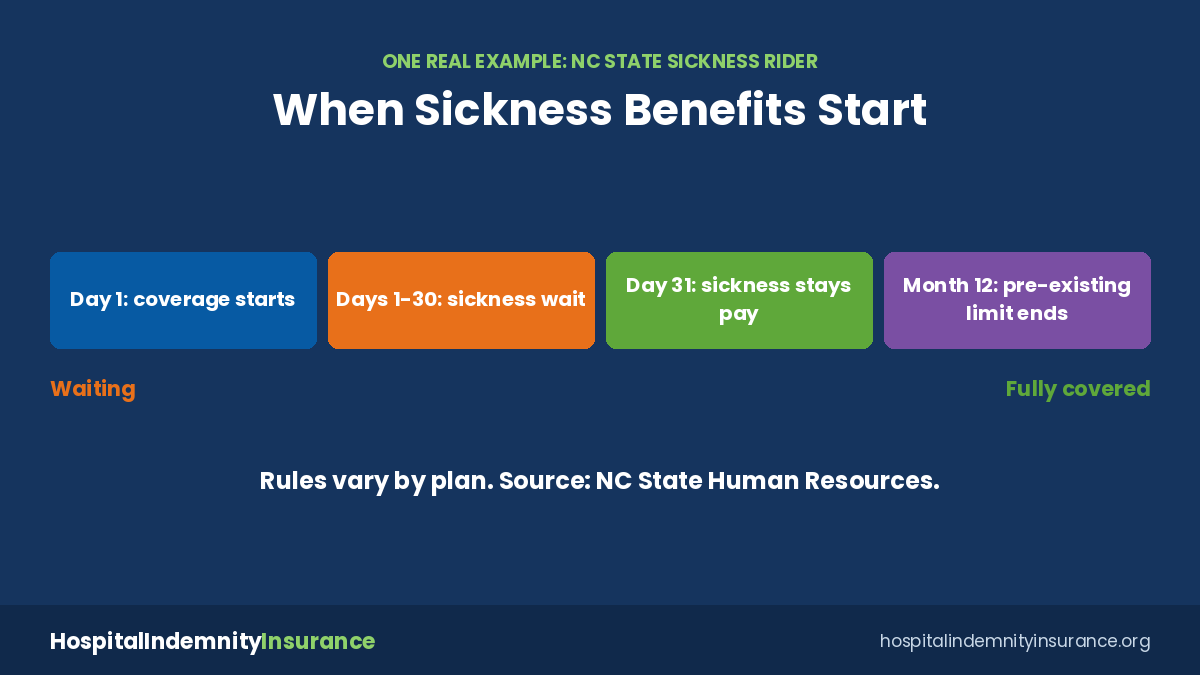
How Waiting Periods Usually Work

Insurers often pay accident claims from the first day of coverage but make you wait before sickness benefits begin. They also limit claims for health problems you had before you enrolled.

Rule What it means Where it shows up
Sickness waiting period No benefit for an illness stay during the first weeks of coverage Common on individual plans and some riders
Pre-existing condition limit No benefit for a recently treated condition for a set time NAIC model rules cap this at 12 months unless a condition is expressly excluded
Maternity waiting period No benefit for a delivery until coverage has been in force for a set time Many plans; terms vary widely

Source: NAIC Accident and Sickness Insurance Minimum Standards Model Regulation; insurer materials.

One real example: North Carolina’s NCFlex accident plan for state employees offers a Sickness Hospital Confinement Rider on its Enhanced option. It pays $200 a day for the employee or spouse and $150 a day for each child for up to 30 days, but only after a 30-day waiting period, and it excludes pre-existing conditions for the first 12 months.

What an Accident and Sickness Hospital Plan Pays For

Accident and sickness hospital indemnity plan waiting period example timeline

Hospital admission. A lump sum when you are admitted as an inpatient, whether from an injury or an illness.

Daily confinement. A set amount for each day you stay, up to a limit per stay.

Intensive care. A higher daily amount on many plans.

Optional riders. Ambulance, ER, outpatient surgery or skilled nursing for an added premium.

Use the cash for a deductible, copays, travel, childcare or bills at home. If an accident sends you to the hospital, an accident plan and a hospital plan can often both pay. See hospital indemnity after an accident.

See Hospital Indemnity Plans in Your ZIP Code

Exclusions That Apply to Both Accidents and Sickness

Even a broad plan has limits. These exclusions show up on many accident and sickness hospital plans.

Self-inflicted injury. Intentional self-harm is commonly excluded.

Hazardous activities. Some plans exclude injuries from activities like racing or skydiving.

Intoxication or illegal acts. Injuries while impaired or committing a felony are often excluded.

Observation and outpatient care. A stay under observation or same-day surgery may not count as an admission.

Read the full list in your policy before you buy. Our guide to common hospital indemnity exclusions explains each one, and hospital indemnity and pre-existing conditions covers health history rules.

How to Tell Which Kind of Plan You Are Buying

1

Read the plan name and first page. Look for “accident only” or “accident and sickness” and the definition of “sickness.”

2

Find the benefit schedule. Check whether the hospital benefits say “due to accident” or “due to accident or sickness.”

3

Check the waiting periods. Note any wait for sickness, maternity and riders.

4

Check the pre-existing rule. See how far back it looks and how long it lasts.

5

Compare the premium per benefit. A cheaper accident-only plan may not pay for the stays you are most likely to have.

Broker tip: If you already have accident coverage at work, ask a licensed agent whether a hospital plan with sickness benefits fills the gap better than adding more accident coverage.

If you are switching plans, avoid dropping your old coverage until the new plan’s sickness waiting period and pre-existing limit have passed, so you are not left without cash benefits in between.

Bottom Line

An accident and sickness hospital indemnity plan pays fixed cash for hospital stays from injuries or illnesses, which covers far more of the reasons people are admitted than an accident-only plan. It is not health insurance, and sickness benefits often start after a waiting period, so read the definitions, waiting periods and pre-existing rules before you buy.

Get Free Hospital Indemnity Insurance Quotes

Accident and Sickness Hospital Indemnity Plan — Frequently Asked Questions

➤ What is an accident and sickness hospital indemnity plan?

It is a hospital cash plan that pays a fixed amount when you are hospitalized for an injury or an illness, rather than only for accidents.

➤ How is it different from accident insurance?

Accident-only coverage pays only for losses caused by an accident. An accident and sickness hospital plan also pays when an illness puts you in the hospital.

➤ Is an accident and sickness plan health insurance?

No. It is a limited-benefit plan that pays fixed cash amounts and does not meet ACA minimum essential coverage.

➤ Is there a waiting period for sickness benefits?

Often, yes. Many plans pay accident claims right away but wait before paying for sickness. North Carolina’s state employee sickness hospital rider, for example, has a 30-day wait.

➤ Are pre-existing conditions covered?

Many plans exclude recently treated conditions for a set time. NAIC model rules cap that exclusion at 12 months unless a condition is expressly excluded by name.

➤ Does it cover childbirth?

Many accident and sickness plans pay for a delivery stay, but maternity waiting periods and exclusions vary. Check the plan’s maternity terms.

➤ Can an accident plan and a hospital plan both pay?

Often yes. Fixed indemnity plans pay regardless of other coverage, so both may pay for the same accident-related stay.

➤ Who should choose accident and sickness over accident-only?

Most people, since illness causes most hospital stays. Accident-only can make sense as an add-on for active families who already have sickness coverage.

Hospital Indemnity Quotes

Call a Licensed Agent Now

Compare hospital indemnity plans from several insurance companies in one call. Any age.

☎ 1-888-891-0229

No obligation to enroll

Find & Compare Plans Online

Speak with a licensed insurance agent

1-888-891-0229

ZRN Health & Financial Services, LLC, a Texas limited liability company