





Speak with a licensed insurance agent

1-888-891-0229

Critical Illness Insurance Pros and Cons: What You Gain and What You Give Up

Reviewed by Russell Noga, Licensed Insurance Agent — Last updated October 28, 2026

The biggest pro of critical illness insurance is a lump-sum cash payment you can use for anything after a covered diagnosis like cancer, heart attack or stroke. The biggest cons are that it pays only for illnesses on its list, it has strict definitions and waiting periods, and it is not health insurance.

Critical illness insurance is one of the most popular add-ons at open enrollment. It sounds simple: get a serious diagnosis, get a check. In practice, the value depends on what the policy covers, how it defines each illness and what you pay for it.

This guide lays out the real pros and cons, with sample benefit numbers from actual policies, so you can decide whether it belongs in your plan. If you are new to this coverage, start with what critical illness insurance is.
Compare Critical Illness and Hospital Plans in Your Area

How Critical Illness Insurance Works

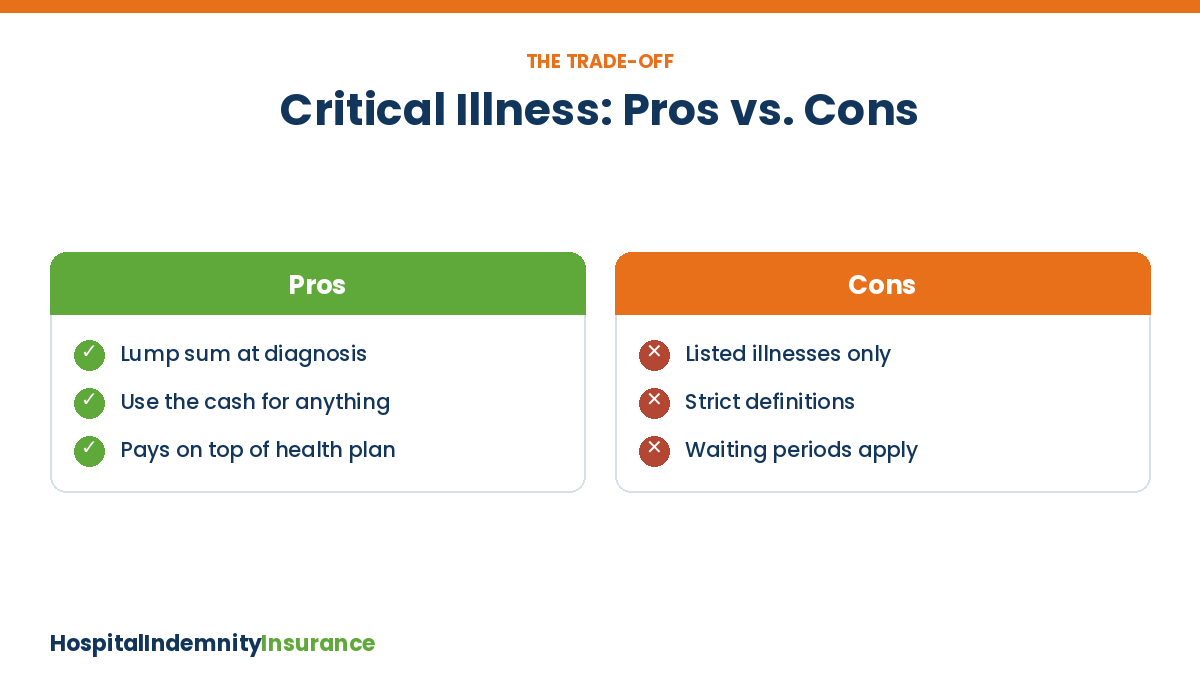
Critical illness insurance pros and cons compared side by side

Critical illness insurance pays a lump sum when you are diagnosed with a covered condition. The amount is set when you buy the plan, often $5,000 to $50,000 at work. It is a limited-benefit plan, not health insurance, and it does not meet ACA minimum essential coverage.

Plan feature Example from real policies
Benefit amount $10,000, $15,000 or $20,000 in one Aflac policy; up to $50,000 in one Principal group plan
Common conditions Cancer, heart attack, stroke, organ transplant, kidney failure, paralysis
Family coverage Spouse and children often get 50% of the employee’s amount
Second claims Some plans pay 50% to 100% for a later covered event
Waiting period 30 days for cancer is common

Sources: Aflac lump-sum critical illness outline (PA); one Principal group plan summary. Plans vary by carrier, employer and state.

Most people get critical illness coverage through an employer, but individual policies are also sold. Either way, the plan does not care what your treatment costs. If the diagnosis meets the policy’s definition, you get the set amount, even if your health plan paid most of the bill. That simple design is the source of both its biggest strengths and its biggest weaknesses.

Hospital Indemnity Quotes

Call a Licensed Agent Now

Compare hospital indemnity plans from several insurance companies in one call. Any age.

☎ 1-888-891-0229

No obligation to enroll

The Pros of Critical Illness Insurance

Cash in one payment. A lump sum arrives early, when bills and lost income hit hardest.

Use it any way. Pay a deductible, rent, a mortgage, travel to a specialist or childcare.

Pays on top of other coverage. It pays no matter what your health plan or disability plan pays.

Easy at work. Many employers offer guaranteed amounts with no health questions at first enrollment.

Some plans also add a small yearly wellness or screening benefit for getting a covered checkup, which can return part of the premium if you use it. Others let you claim again for a different covered illness later, so one payment does not always end the policy.

For working adults, the lump sum often does more than cover medical bills. It can replace pay during weeks off work, which a health plan never does. Many group plans are also portable, so you may be able to keep the coverage if you change jobs.

Good to know: Critical illness benefits are often tax-free when you pay premiums with after-tax money. Tax rules depend on how premiums are paid, so check with a tax professional.

The Cons of Critical Illness Insurance

Only listed illnesses pay. A condition that is not on the list, or does not meet the policy’s definition, pays nothing.

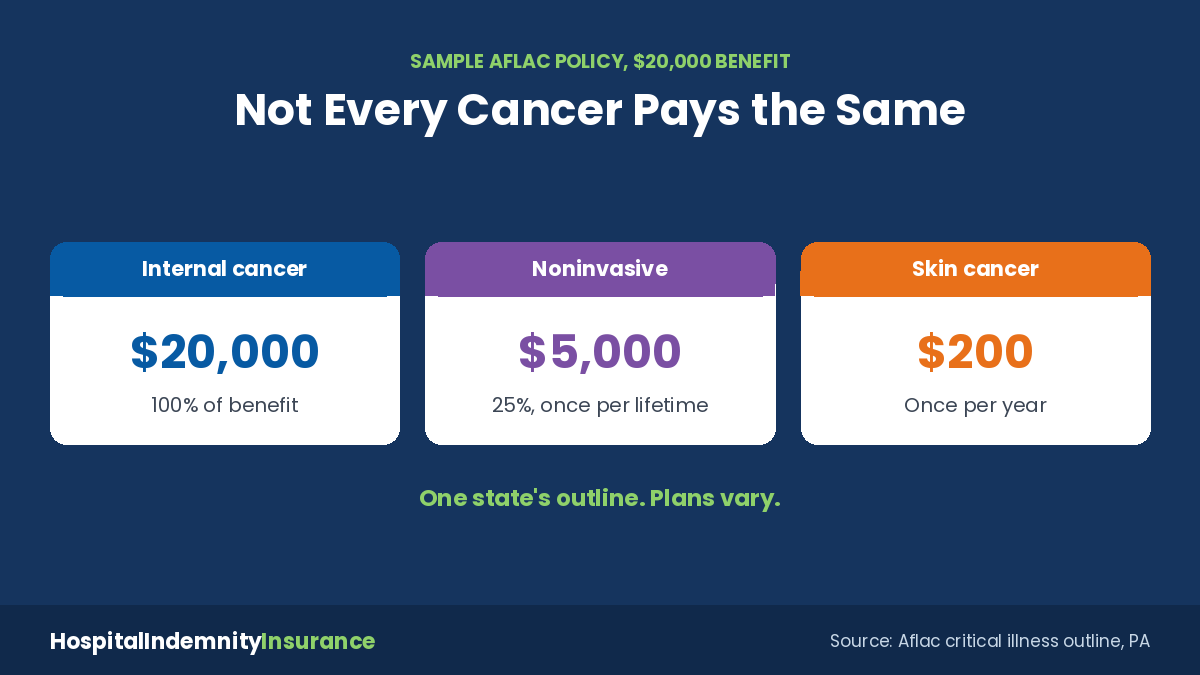
Partial payments for early cancer. Noninvasive cancer may pay only 25%, and skin cancer may pay just a few hundred dollars.

Waiting and pre-existing rules. A cancer found in the first 30 days, or a condition treated in the 12 months before coverage, may be excluded.

Premiums rise with age. Many plans price by age band, so costs climb as you get older.

It also does not cover hospital stays, accidents or routine care unless those lead to a covered diagnosis. A broken leg, a bad case of pneumonia or a planned surgery will usually pay nothing. And the plan never replaces your health insurance, so you still need major medical coverage to pay doctors and hospitals.

The other big con is that you may never use it. Many people pay premiums for years without a covered diagnosis. That is how all insurance works, but it is why you should size the benefit to a real gap instead of buying the largest amount offered.

Pros and Cons Side by Side

Critical illness insurance pros and cons sample cancer payouts on a $20,000 benefit
Pros Cons
Lump-sum cash at diagnosis Pays only for conditions on its list
Money can be used for anything Strict medical definitions must be met
Pays on top of health and disability plans Waiting periods and pre-existing limits
Often no health questions at work Reduced benefits for early-stage or skin cancer
Can cover spouse and children Premiums often rise with age

Wondering about the price side of the equation? See how much critical illness insurance costs for the factors that set your premium.

See Cash Benefit Plans in Your ZIP Code

Who Gets the Most From It

High-deductible plan members. A lump sum can cover the deductible and out-of-pocket maximum in one shot.

Families with one main income. Cash can keep the household running if the earner gets sick.

People with a family history. If heart disease, stroke or cancer runs in the family, the coverage may get used.

People with little savings. If a few weeks off work would strain your budget, a lump sum helps.

Broker tip: Start with the guaranteed amount your employer offers without health questions. You can often add more later, but you may have to answer medical questions to do it.

It may be less useful if you already have strong savings, a low deductible and good disability coverage. For a deeper look at value, see is critical illness insurance worth it.

How to Decide, Plus Where Hospital Indemnity Fits

1

Find your gap. Add your health plan’s out-of-pocket maximum to 2 to 3 months of lost pay.

2

Read the covered list. Check each condition and how it is defined, especially cancer.

3

Check the waiting periods. Note any 30-day cancer wait and pre-existing condition rules.

4

Price it. Compare the yearly premium with the benefit and your savings.

5

Fill the other gaps. Consider hospital indemnity for stays from accidents, illness or childbirth.

Critical illness pays for a diagnosis. Hospital indemnity pays when you are admitted for any covered reason, which makes it a natural partner for working adults, families planning a pregnancy and Medicare Advantage members. Compare the two in critical illness insurance vs hospital indemnity.

Bottom Line

The main pro of critical illness insurance is a fast, flexible lump sum after a serious diagnosis; the main cons are its narrow list of covered illnesses, strict definitions and waiting periods. Size the benefit to a real financial gap, read the definitions, and pair it with hospital indemnity if hospital stays are your bigger worry.

Get Free Supplemental Insurance Quotes

Critical Illness Insurance Pros and Cons — Frequently Asked Questions

➤ What are the main pros of critical illness insurance?

It pays a lump sum directly to you after a covered diagnosis, you can use the money for anything, and it pays on top of your other coverage.

➤ What are the main cons of critical illness insurance?

It pays only for listed illnesses that meet strict definitions, it often has waiting periods and pre-existing limits, and premiums may rise with age.

➤ Is critical illness insurance worth it?

It can be if a serious illness would strain your savings or income. It may be less useful if you have a low deductible, strong savings and disability coverage.

➤ Does critical illness insurance cover cancer?

Most plans cover invasive cancer at the full benefit. Early-stage or noninvasive cancer often pays a smaller share, such as 25%, and skin cancer may pay a small flat amount.

➤ Can I get critical illness insurance with a pre-existing condition?

Often yes, especially at work, but many plans exclude claims tied to conditions treated in the 12 months before coverage for a set period.

➤ Is the critical illness payout taxable?

Benefits are often tax-free when premiums are paid with after-tax dollars. Check with a tax professional for your situation.

➤ Is critical illness insurance the same as health insurance?

No. It is a limited-benefit supplement that pays cash. It does not replace health insurance or meet ACA minimum essential coverage.

➤ Should I get critical illness or hospital indemnity insurance?

Critical illness pays for a diagnosis, while hospital indemnity pays for hospital stays from any covered cause. Some people carry both to cover different risks.

Hospital Indemnity Quotes

Call a Licensed Agent Now

Compare hospital indemnity plans from several insurance companies in one call. Any age.

☎ 1-888-891-0229

No obligation to enroll

Find & Compare Plans Online

Speak with a licensed insurance agent

1-888-891-0229

ZRN Health & Financial Services, LLC, a Texas limited liability company