Reviewed by Russell Noga, Licensed Insurance Agent — Last updated November 22, 2026
Hospital indemnity insurance for pregnancy pays you a fixed cash amount when you are admitted to a hospital to deliver, as long as the plan covers normal childbirth and the pregnancy began after your coverage started. Workplace plans are the most likely to pay for a routine birth, while many individual policies pay only for complications or treat an existing pregnancy as a pre-existing condition.
2027 by the Numbers
32.4%
of U.S. births in 2024 were cesarean deliveries (CDC/NCHS)
9.8%
of newborns were admitted to a NICU in 2023 (CDC/NCHS)
$2,743
average out-of-pocket cost for pregnancy, birth and postpartum care in employer plans (KFF, 2021-2023 claims)
9 months
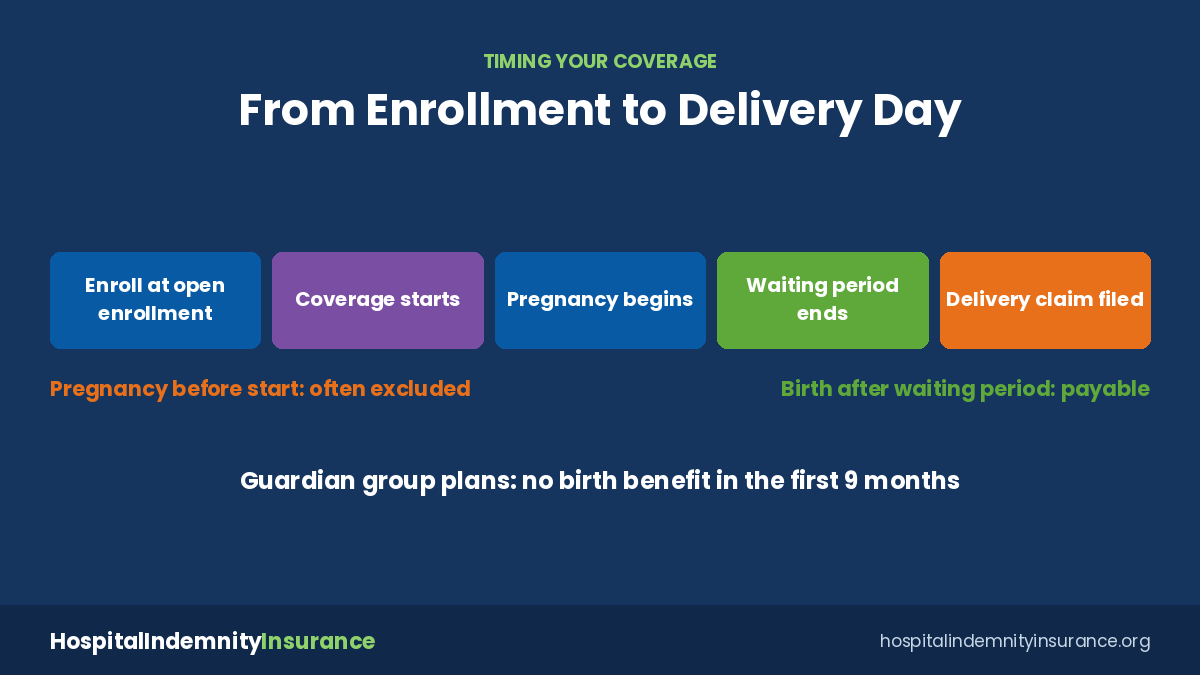
Guardian group plans pay no birth benefit in the first 9 months of coverage (Guardian)
Giving birth is one of the most common reasons working-age adults are admitted to a hospital, and even well-insured families leave owing a deductible and coinsurance. A hospital cash plan pays you, not the hospital, a set amount per admission or per day.
This hub explains which pregnancy events can trigger a payment, how these plans differ from the maternity benefits in your health plan, what five carriers’ own documents say about childbirth, and how to time enrollment. For dollar figures on a typical claim, see how much hospital indemnity insurance pays for pregnancy.