





Speak with a licensed insurance agent

1-888-891-0229

Hospital Indemnity Protection Plan: How to Build Coverage That Fits Your Costs

Reviewed by Russell Noga, Licensed Insurance Agent — Last updated October 28, 2026

A hospital indemnity protection plan is a supplemental policy that pays you set cash amounts when you are hospitalized, built from a core hospital benefit plus optional add-ons. The best plan is sized to the gap your main coverage leaves, such as your deductible, daily copays or lost pay, not simply the highest benefit you can buy.

“Protection plan” is how many insurers and employers describe hospital indemnity coverage. UnitedHealthcare, for example, names its workplace product Hospital Indemnity Protection. Whatever the name, these plans share the same building blocks: an admission benefit, a daily benefit and optional riders.

This guide shows how those pieces fit together and how to size a plan for working adults, families and people on Medicare. If you want the basics first, see costs covered by hospital indemnity plans.
Compare Hospital Indemnity Protection Plans

What a Hospital Indemnity Protection Plan Does

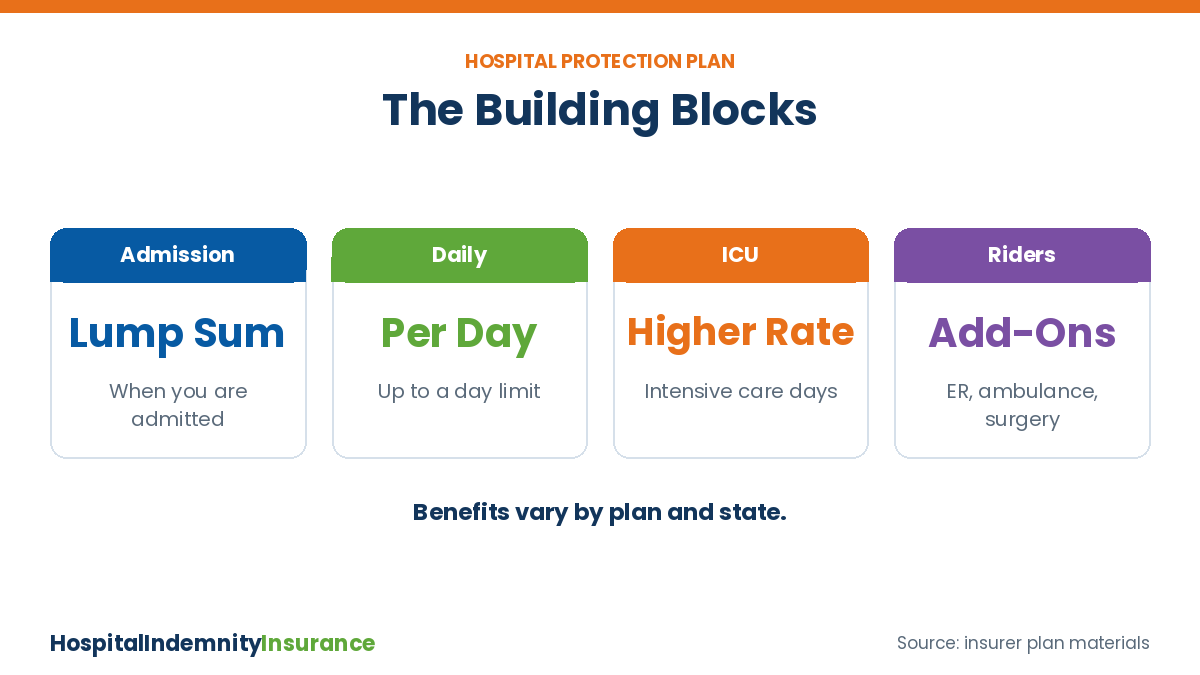
Hospital indemnity protection plan building blocks: admission, daily, ICU and riders

The plan pays a fixed dollar amount for covered events, mainly hospital admissions and each day you stay. It pays the same amount whatever your hospital charges and whatever your health plan pays. The money usually goes to you, so you can use it for medical bills or for rent, groceries and childcare while you recover.

Fills gaps, not bills. It is meant to cover what your main coverage leaves, like a deductible or daily copays.

Protects income. Cash during a stay helps if you are not paid while you are out of work.

Stacks with other plans. It pays on top of an employer plan, a Marketplace plan, Medicare Advantage or Original Medicare.

Think of it as one layer in a larger safety net. Your health plan or Medicare pays the hospital, your savings handle small surprises, and a hospital protection plan adds cash at the moment a stay hits your budget hardest. Because benefits are fixed, you know in advance exactly what each covered day or admission will pay, which makes it easier to plan around than a percentage-based benefit.

Important: Hospital indemnity is a limited-benefit plan that pays fixed cash amounts. It is NOT health insurance, does not replace major medical coverage or Medicare and does not meet ACA minimum essential coverage.

Hospital Indemnity Quotes

Call a Licensed Agent Now

Compare hospital indemnity plans from several insurance companies in one call. Any age.

☎ 1-888-891-0229

No obligation to enroll

The Building Blocks of a Protection Plan

Most plans start with a core hospital benefit, then let you add more. Here is how the pieces usually work.

Building block What it pays Good for
Admission benefit A lump sum when you are admitted Covering a deductible right away
Daily confinement benefit A set amount per day, up to a day limit Daily copays and lost pay on longer stays
ICU benefit A higher daily amount for intensive care Serious illness or injury
Observation benefit A full or partial amount for observation stays on some plans Short stays that are not formal admissions
Optional riders Ambulance, ER, outpatient surgery, skilled nursing, cancer or wellness Costs outside an inpatient stay

Benefits and riders vary by plan and state.

UnitedHealthcare’s illustration for its Hospital Indemnity Protection plan shows how the blocks add up: $1,500 for the admission plus $600 for days spent in the hospital, $2,100 in all. Amounts on your plan depend on what you choose.

Real Examples of What Protection Plans Include

Two plans show how the building blocks look in practice, one sold at work and one sold to individuals.

Plan Sold to Notable features
UnitedHealthcare Hospital Indemnity Protection Employers with 100 or more eligible employees Admission, ICU admission, short-term observation, surgery and rehab benefits; $50 yearly wellness rider; guaranteed issue; portable at group rates
UnitedHealthcare AdvantageGuard (Golden Rule Insurance Company) Individuals ages 60 to 90 Daily inpatient benefit; observation stays of 12 to 24 hours paid at 100%, up to 4 days a year; riders for ER, ambulance, outpatient surgery, skilled nursing, cancer and more

Sources: UnitedHealthcare and Golden Rule plan materials. Availability varies by state.

If you are on Medicare Advantage, a daily benefit that matches your plan’s hospital copay is often the core of your protection. Learn more about hospital indemnity with Medicare Advantage.

How to Size Your Protection

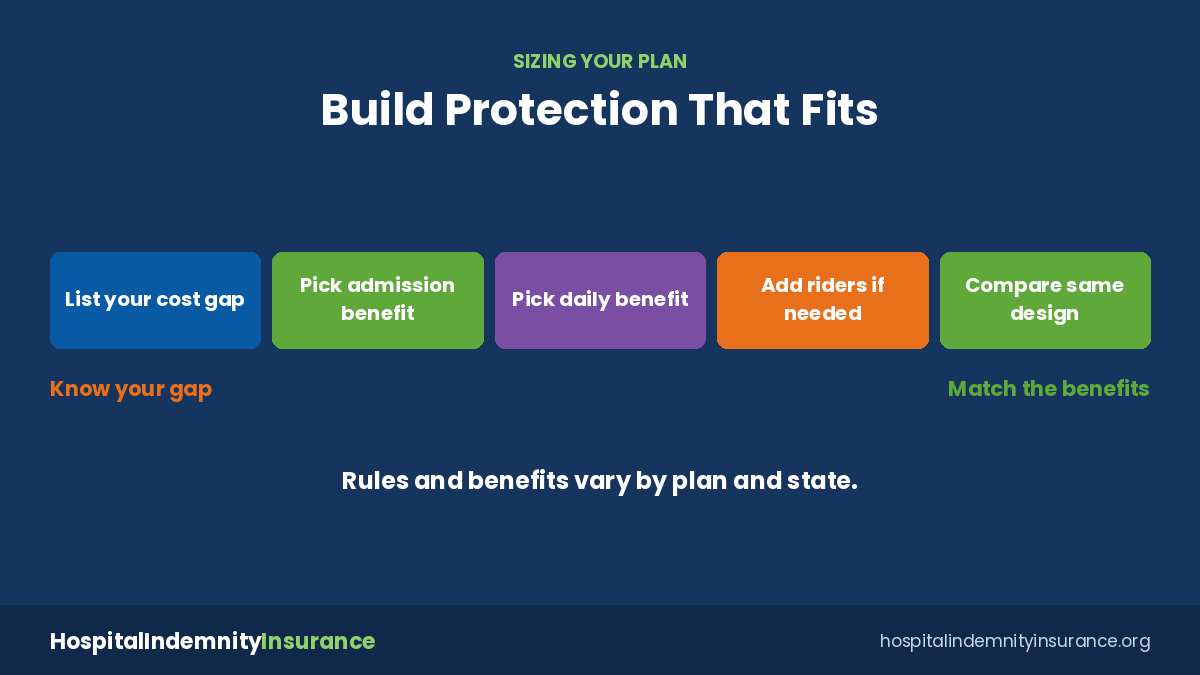
How to size a hospital indemnity protection plan to your out-of-pocket gap

Start with what a stay would actually cost you, then pick benefits to match. Buying more than your gap raises the premium without much extra value.

Working adults. Match the admission benefit to your deductible and the daily benefit to a day’s lost pay.

Families. Consider covering everyone, and check how the plan treats childbirth and a newborn’s stay.

Medicare Advantage members. Match the daily benefit to your plan’s inpatient copay for the days it charges.

Original Medicare. Use the admission benefit toward the Part A deductible if you have no Medigap plan.

Good to know: Riders are where premiums climb. Add an ER or outpatient surgery rider only if those costs are a real risk under your main coverage. See whether hospital indemnity covers ER visits and hospital indemnity for surgery.

See Hospital Protection Plans in Your ZIP Code

Fine Print That Can Weaken Your Protection

A plan that looks generous can pay less than you expect if you skip these rules.

Pre-existing conditions. AdvantageGuard, for example, does not pay for pre-existing conditions during the first 6 months; other plans use up to 12 months.

Waiting periods. Some riders, such as cancer and wellness on AdvantageGuard, generally have a 30-day wait.

Observation vs. admission. If your plan pays only for formal admissions, a night under observation may pay nothing.

Day limits and caps. Per-stay day limits and yearly maximums cap what a long stay can pay.

Also check renewability. A plan renewable for life cannot be canceled because your health changes as long as you pay, though premiums can still rise. See hospital indemnity insurance cost for what drives price.

How to Set Up Your Hospital Protection Plan

1

List your out-of-pocket gap. Deductible, hospital copays, coinsurance and a few days of lost pay.

2

Choose the core benefits. Pick an admission benefit and a daily benefit that cover that gap for a typical stay.

3

Add riders only for real risks. ER, ambulance or outpatient surgery if your main plan leaves big costs there.

4

Check the rules. Observation coverage, waiting periods, pre-existing limits and renewability.

5

Compare quotes for the same design. Line up identical benefits across insurers so prices are comparable.

Broker tip: A licensed agent can build the same protection design with several insurers at once, at no extra cost to you, so you can see who offers the best value in your state.

Review your plan each year. If your deductible, Medicare Advantage copays or family size change, your protection may need to change too.

Bottom Line

A hospital indemnity protection plan pays fixed cash for hospital stays, built from an admission benefit, a daily benefit and optional riders. It is not health insurance, so size it to the gap your main coverage leaves, check observation and pre-existing rules, and compare the same design across several insurers before you buy.

Get Free Hospital Indemnity Insurance Quotes

Hospital Indemnity Protection Plan — Frequently Asked Questions

➤ What is a hospital indemnity protection plan?

It is a supplemental plan that pays you fixed cash amounts when you are hospitalized. “Protection plan” is a common name for hospital indemnity coverage.

➤ Is a hospital indemnity protection plan health insurance?

No. It is a limited-benefit plan that pays fixed amounts and does not meet ACA minimum essential coverage. Keep your main health plan or Medicare.

➤ What does a hospital protection plan usually cover?

Most pay for hospital admissions and each day you stay, often with higher ICU benefits. Many offer riders for ER visits, ambulance, outpatient surgery or skilled nursing.

➤ How much coverage should I buy?

Aim to cover the gap your main coverage leaves, such as your deductible, daily hospital copays and a few days of lost pay.

➤ Does it pay for observation stays?

Some plans do. AdvantageGuard pays its inpatient benefit for observation stays of 12 to 24 hours, up to 4 days a year. Other plans pay only for formal admissions.

➤ Can I get a protection plan through work?

Often yes. UnitedHealthcare’s Hospital Indemnity Protection, for example, is offered by employers with 100 or more eligible employees and is portable at group rates.

➤ Are pre-existing conditions covered?

Many plans limit them at first. AdvantageGuard excludes pre-existing conditions for the first 6 months, and other plans use up to 12 months.

➤ Can I use the cash for anything?

Yes. Benefits are usually paid to you, so you can use them for medical bills, rent, groceries, travel or childcare.

Hospital Indemnity Quotes

Call a Licensed Agent Now

Compare hospital indemnity plans from several insurance companies in one call. Any age.

☎ 1-888-891-0229

No obligation to enroll

Find & Compare Plans Online

Speak with a licensed insurance agent

1-888-891-0229

ZRN Health & Financial Services, LLC, a Texas limited liability company