Reviewed by Russell Noga, Licensed Insurance Agent — Last updated November 3, 2026
Supplemental insurance is worth it if a hospital stay, injury or serious diagnosis would leave you with a deductible or lost income you could not pay from savings, and it is usually not worth it if you already have a solid emergency fund and low out-of-pocket costs. For most buyers, hospital indemnity is the broadest place to start, with accident, critical illness or cancer coverage added only when a specific risk fits your household.
2027 by the Numbers
63%
of adults would cover a $400 surprise with cash or its equivalent (Federal Reserve, 2025)
$12,000
2027 ACA out-of-pocket limit, self-only (HealthCare.gov)
$1,750
2027 minimum deductible for an HSA-eligible plan, self-only (IRS)
$3,297
average hospital expense per adjusted inpatient day, 2024 (KFF)
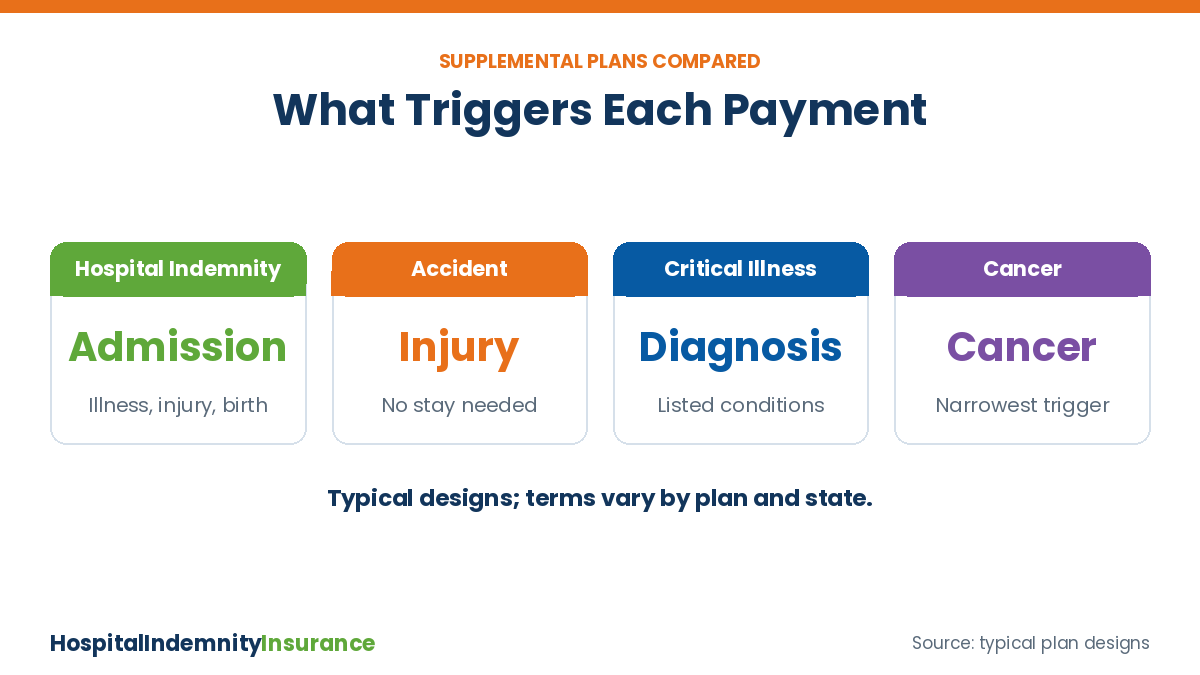
Supplemental health insurance is a family of small policies that pay you cash when something specific happens: a hospital admission, an injury, a heart attack or stroke, or a cancer diagnosis. Whether one is a smart buy depends less on the product and more on your savings, your deductible and your household’s real risks.
This guide compares the four main products as a group, shows who tends to collect and who tends to overpay, and gives you a simple way to decide. If hospital coverage is your main question, see our deeper look at whether hospital indemnity insurance is worth it.