Reviewed by Russell Noga, Licensed Insurance Agent — Last updated November 12, 2026
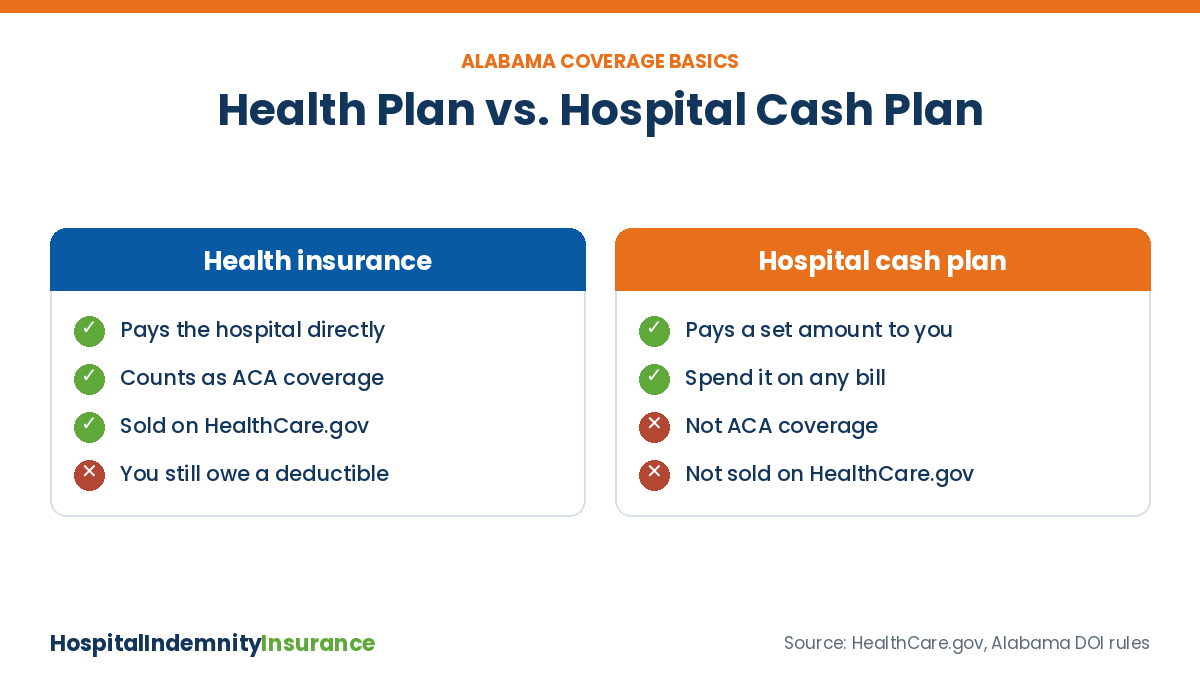
Hospital indemnity insurance in Alabama is a limited-benefit policy that pays you a set cash amount when you are admitted to a hospital, and Alabamians get it through employers and state plans such as PEEHIP, SEIB and Auburn University, or buy it on their own from insurers like Aflac and American Fidelity. The cash goes to you to use on deductibles, copays, travel or rent. It is not health insurance, it is not sold on HealthCare.gov and it does not count as ACA minimum essential coverage.
2027 by the Numbers
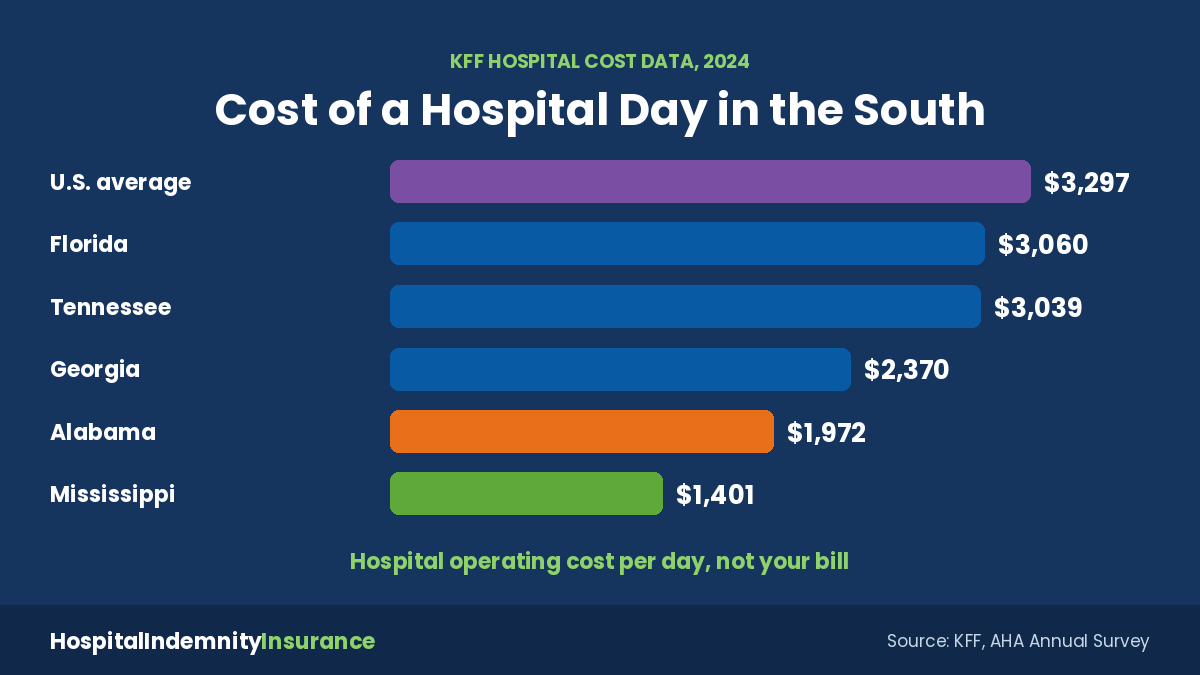
$1,972
Alabama hospital expenses per adjusted inpatient day, 2024, vs. $3,297 for the U.S. (KFF)
61%
of Alabama’s 1.14 million Medicare enrollees in Medicare Advantage or other private plans, early 2026 (CMS)
455,776
Alabamians who picked a 2026 Marketplace plan during open enrollment (CMS)
15 of 58
rural Alabama counties with a labor and delivery unit (PARCA, 2026)
Alabama is a low-cost state for hospitals but a high-gap state for patients. A hospital day costs Alabama hospitals about 40% less than the national figure, yet the state has not expanded Medicaid, Marketplace premiums are climbing for 2027, and most rural counties have no place to deliver a baby.
That mix is why so many Alabama employers, from the teachers’ plan to county school boards, put a hospital cash plan on the benefits menu. Below you will find which Alabama plans we found in public documents, how a cash benefit fits each kind of coverage, and the state rules on ads and claims. New to the product? Read what hospital indemnity insurance is first.