Reviewed by Russell Noga, Licensed Insurance Agent — Last updated November 4, 2026
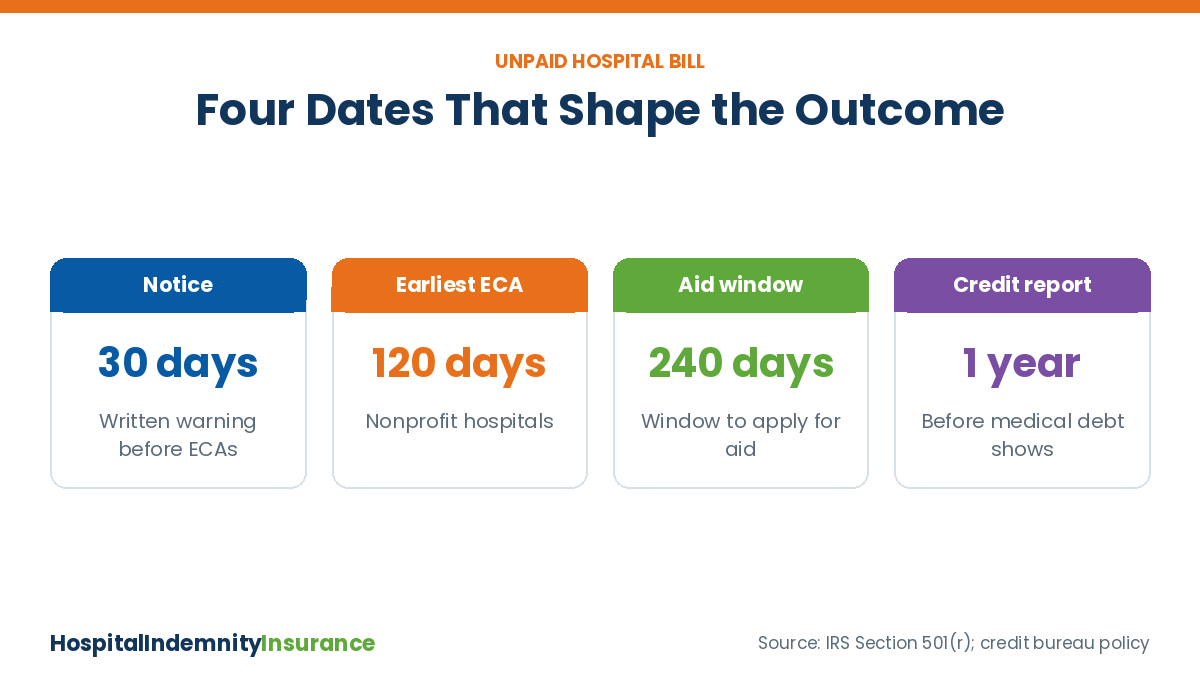
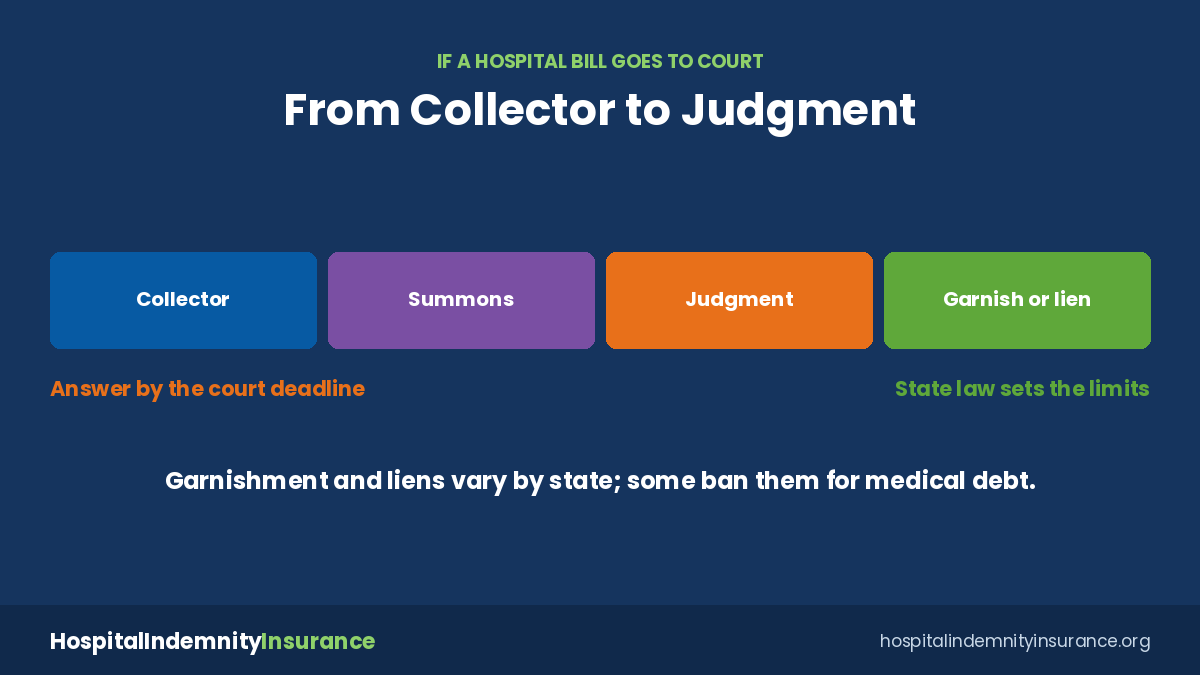
If you don’t pay a hospital bill, the hospital sends reminders, then usually hands or sells the account to a collection agency, and it can eventually sue you, win a judgment and, where state law allows, garnish wages or place a lien. Nonprofit hospitals must wait at least 120 days after the first bill before those steps, and the three credit bureaus don’t report medical collections under $500 or for the first year.
2027 by the Numbers
20 million
U.S. adults owe more than $250 in medical debt (KFF, 2024)
120 days
minimum wait before a nonprofit hospital starts extraordinary collection actions (IRS 501(r))
1 year
delay before the credit bureaus report a medical collection (Equifax, Experian, TransUnion)
15 states + DC
with their own laws limiting medical debt on credit reports (NCLC, 2026)
An unpaid hospital bill rarely turns into a lawsuit overnight. It moves through stages, each with its own rules: federal tax rules for nonprofit hospitals, credit bureau policies, debt collection law and state protections.
Below is that sequence in order, with the deadlines that work in your favor. If the bill is from an emergency visit with no coverage, see your rights when going to the hospital without insurance too.